
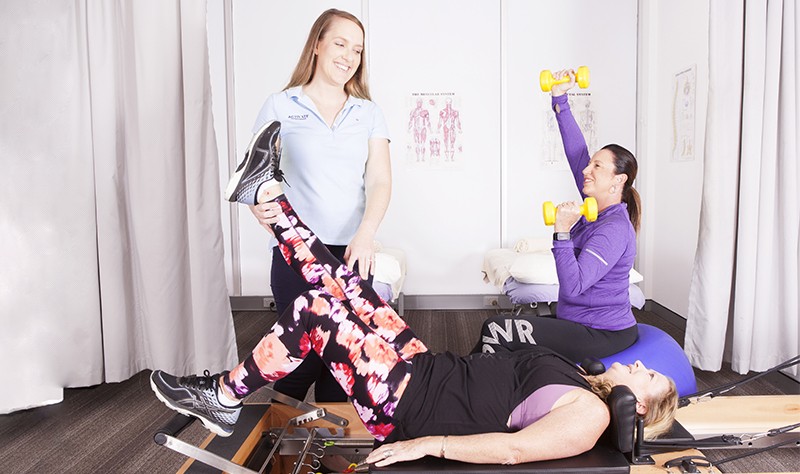
Not sure whether you need a physiotherapist or an exercise physiologist? You’re not alone. Both professionals help people move better, manage pain and improve their physical health, but they bring different skills to the table.
Whether you’re dealing with a new injury, struggling with persistent back pain, returning to exercise after a break or wanting to build strength and confidence, understanding the difference can help you choose the right support.
And sometimes, the best approach involves both.
What’s the difference between a physiotherapist and an exercise physiologist?
The main difference is that physiotherapists are trained to assess and diagnose injuries and movement-related conditions, while exercise physiologists specialise in using clinical exercise to improve health, function and physical capacity.
That might sound quite similar especially when you consider both are university-qualified allied health professionals, and both use exercise as part of their treatment. However, their training and areas of practice differ.
What does a physiotherapist do?
A physiotherapist assesses, diagnoses and treats conditions affecting movement and physical function.
The most common area of practice for physios is musculoskeletal therapy. Physiotherapists commonly help people experiencing:
- Spinal pain such as back and neck pain
- Injuries to the other joints of the body like knee, hip, ankle, shoulder, elbow and wrist pain
- Muscle strains, ligament sprains and joint injuries
- Sports injuries
- Fractures and post-surgical rehabilitation
- Persistent pain and movement limitations
- Difficulty returning to work, sport or everyday activities
As well as musculoskeletal injuries physios also work in less well known areas such as:
- Women’s and Men’s health helping with issues like bladder and bowel issues
- Education and developmental therapy
- Neurological rehabilitation
- Cardiothoracic and respiratory therapy
- Disability care
Physiotherapists use their skills and knowledge to perform in-depth assessments to get to the root cause of problems or symptoms you may be experiencing. As a part of their assessment and diagnosis, Physiotherapists can refer patients for imaging such as xrays, CT scans and MRI’s.
Physiotherapy treatment may include education, hands-on treatment, exercise prescription, movement retraining and rehabilitation. Physios can also prescribe and create braces and casts
While physiotherapists are often associated with treating pain and injuries, their role extends well beyond relieving symptoms. They also help people rebuild strength, improve movement and return to the activities they enjoy.
What does an exercise physiologist do?
An Accredited Exercise Physiologist (AEP) specialises in prescribing and delivering evidence-based exercise for people with injuries, medical conditions, disabilities or limitations affecting their physical function.
Exercise physiologists commonly help people with:
-
Injury rehabilitation and rebuilding physical capacity
-
Persistent musculoskeletal pain
-
Arthritis and osteoporosis
-
Diabetes, cardiovascular disease and other chronic health conditions
-
Reduced strength, balance or mobility
-
Returning to regular exercise after illness or inactivity
-
Improving confidence with physical activity
- Assisting with improving and maintaining the capacity of people with a disability
Rather than simply providing a general fitness program, an exercise physiologist develops a clinically informed exercise plan tailored to a person’s health, abilities and goals.
Their focus is on using exercise as a treatment to improve health, physical function and long-term wellbeing.
Physiotherapist vs exercise physiologist: At a glance
|
PHYSIOTHERAPIST A physiotherapist can be the first port of call for musculoskeletal conditions |
EXERCISE PHYSIOLOGIST Exercise physiologists support patients with clinical exercise interventions when safe to do so |
|---|---|
| Assesses and diagnoses injuries and movement-related conditions | They do not diagnose but can assess exercise capacity and functional limitations |
| Treats acute and persistent pain and injuries | Uses clinical exercise to manage injuries and health conditions |
| May use hands-on treatment, taping, splinting/bracing, education and exercise | Primarily uses exercise prescription, education and behaviour-change strategies |
| Provides rehabilitation from injury through to return to activity | Builds physical capacity, strength and confidence through structured exercise |
| Can assess and diagnose new or unexplained musculoskeletal symptoms including referring for xrays, CT or MRI scans | Can support rehabilitation once appropriate medical assessment has occurred |
The important thing to remember? Both professionals can help with rehabilitation, strengthening and returning to exercise. The best choice depends on your individual circumstances, rather than simply how long you’ve been experiencing symptoms.
Should I see a physio or exercise physiologist for back pain?
If you’re experiencing new, unexplained or worsening back pain, a physiotherapist is generally a good place to start. If you’re managing an established back condition and want support building strength, improving fitness or returning to regular activity, an exercise physiologist may also be a good option.
A physiotherapist can assess your symptoms, identify possible contributing factors, screen for concerns requiring medical review and develop a treatment plan.
This may involve advice about managing pain, modifying activities, improving movement and gradually returning to exercise.
For someone experiencing recurring or persistent back pain, an exercise physiologist can help develop a structured strengthening and conditioning program.
This might include improving trunk and lower limb strength, building tolerance to lifting and bending, or gradually increasing walking and exercise capacity.
Importantly, exercise is often an important part of managing back pain, and having some discomfort doesn’t automatically mean you should stop moving.
For many people, physiotherapy can provide both the initial assessment and the ongoing exercise-based rehabilitation needed to manage their symptoms and improve their physical capacity.
If back pain is accompanied by new bladder or bowel dysfunction, numbness around the groin or saddle area, or significant or progressive leg weakness, seek urgent assessment with a medical professional.

Can an exercise physiologist help with injury rehabilitation?
Yes. Exercise physiologists can play an important role in injury rehabilitation by helping people rebuild strength, endurance, movement capacity and confidence through structured exercise.
Recovering from an injury isn’t always as simple as waiting for the pain to disappear.
After a period of reduced activity, muscles may become weaker, fitness can decline and movements that were previously easy may feel more difficult.
An exercise physiologist can help address these changes through an individualised rehabilitation program.
For example, someone recovering from an ankle injury might initially work with a physiotherapist to assess the injury, manage symptoms and restore movement.
As rehabilitation progresses, an exercise physiologist may help build lower limb strength, balance, endurance and tolerance to activities such as walking, running or sport.
Similarly, someone recovering from knee surgery may benefit from progressive resistance training and functional exercises to prepare them for the demands of everyday life.
However, exercise physiology isn’t limited to the final stages of recovery, and physiotherapists are equally capable of delivering progressive exercise-based rehabilitation throughout the recovery process.
The important thing is that rehabilitation is appropriately tailored to the injury, the person’s current physical capacity and the activities they want to return to.
Can a physiotherapist help me return to exercise?
Absolutely. Physiotherapists don’t just help people recover from injuries. They can also help you return to exercise safely and confidently, particularly if pain, previous injuries or movement limitations are holding you back.
Perhaps you’ve had a few months away from the gym, you’re thinking about getting back into running, or you’ve noticed that your knees or back aren’t quite as comfortable as they used to be.
A physiotherapist can assess your movement, strength and current physical capacity, identify factors that may be contributing to discomfort, to help you overcome it and help you plan a gradual return to activity.
This might involve:
- Modifying exercises to accommodate an injury or painful joint
- Improving strength and movement control
- Gradually increasing exercise intensity and volume
- Managing symptoms as activity levels increase
- Developing a return-to-running, gym or sporting program
One of the most common mistakes people make when returning to exercise is trying to pick up exactly where they left off. Your motivation might be ready for a five-kilometre run or a full gym session, but your current physical capacity may need a little time to catch up.
A physiotherapist can help you find a starting point that challenges your body appropriately without doing too much too soon.

When might rehabilitation transition from physiotherapy to exercise physiology?
Rehabilitation doesn’t necessarily need to transition from a physiotherapist to an exercise physiologist. Both professions are qualified to prescribe exercise and support people through different stages of injury recovery.
In fact, physiotherapists can guide rehabilitation all the way from an initial injury assessment through to progressive strengthening, conditioning and returning to work, exercise or sport.
As recovery progresses, the focus of rehabilitation often changes.
Early treatment might concentrate on understanding the injury, managing symptoms and restoring movement. Later, rehabilitation may involve progressively increasing strength, endurance, balance and the body’s capacity to cope with everyday activities or sporting demands.
For some people, working with an exercise physiologist during this process can be beneficial, particularly when structured exercise is the main focus or when other health conditions need to be considered.
For others, continuing with their physiotherapist provides the continuity and expertise needed to achieve their rehabilitation goals.
The important transition isn’t necessarily between health professionals. It’s the progression from managing an injury to rebuilding the physical capacity needed to return to the activities you enjoy.
Can I see both a physiotherapist and an exercise physiologist?
Yes. Physiotherapists and exercise physiologists can work together to support injury rehabilitation, chronic disease management and improvements in physical function.
Because their skills overlap, however, seeing both professionals isn’t always necessary.
For example, someone with persistent back pain might benefit from physiotherapy to assess their symptoms and develop a progressive strengthening and movement program.
Another person recovering from a significant injury might work with a physiotherapist for injury management and an exercise physiologist for additional supervised conditioning.
The best approach depends on your health, individual goals, the complexity of your condition and the support you need.
At Activate Physiotherapy, our physiotherapists incorporate exercise-based rehabilitation into their treatment plans, helping patients progress beyond pain management towards improved strength, movement and confidence.
This means that for many patients, the same physiotherapist who assesses their injury can also guide their ongoing rehabilitation and return to activity. Some of our team are actually even dual qualified meaning they are both a Physiotherapist AND an Accredited Exercise Physiologist so you get the best of both worlds!
So, who should I book with?
OK so at this point you might still be confused as to whether a Physio or an AEP is the best health professional for you so let’s do a little scenario planning.
If you’re dealing with a new injury, unexplained pain, or discomfort that’s stopping you from doing the activities you enjoy, a physiotherapist is a great place to start.
Physiotherapists can assess your symptoms, identify potential contributing factors and develop an individualised treatment plan that may include hands-on treatment, education, strengthening and progressive exercise.
If you’re managing an established health condition or looking for structured clinical exercise support, an Accredited Exercise Physiologist may also be appropriate.
However, you don’t necessarily need to choose between the two professions to receive effective exercise-based rehabilitation.
At Activate Physiotherapy, our physiotherapists can help you progress from injury assessment and symptom management through to rebuilding strength, improving physical capacity and returning to your usual activities.
Whether you’re getting back into the gym, recovering from a sporting injury or simply wanting to move more comfortably, we’ll work with you to develop a rehabilitation plan that suits your needs.
Helping you get back to doing what you love
At Activate Physiotherapy, we believe that getting out of pain is just the beginning. A milestone, to let you know you’re recovery is headed in the right direction.
Successful rehabilitation is also about rebuilding strength, restoring confidence and preparing your body for the activities you want to return to.
Our physiotherapists combine clinical assessment, individualised treatment and exercise-based rehabilitation to support your recovery and help you work towards your goals.
From managing back pain to recovering from an injury or returning to exercise after a break, our team at Tingalpa and Stafford is here to help.
Ready to get moving again? Book an appointment with Activate Physiotherapy and take the next step towards getting back to doing what you love.
David is a dual-qualified physiotherapist and exercise physiologist with extensive clinical experience in musculoskeletal physiotherapy, injury management and exercise-based rehabilitation. He is passionate about helping people move confidently, build strength and return to the activities that matter most to them.
Recent Comments