
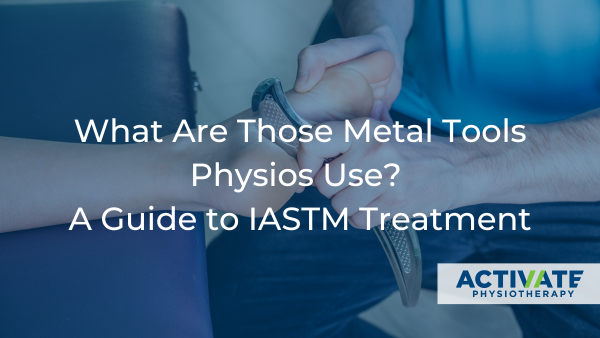
What is IASTM
Instrument Assisted Soft Tissue Mobilisation (IASTM) is a physiotherapy treatment that uses specially designed stainless-steel tools to help reduce pain, improve mobility, and treat muscle, tendon, and connective tissue injuries. It is commonly used for tendon pain, muscle tightness, scar tissue restrictions, and movement dysfunction.
Ever seen a physiotherapist or massage therapist using shiny metal tools instead of their hands and wondered what they are?
You’re not alone.
One of the most common questions we hear in the clinic is:
“What are those metal scraping tools you’re using?”
The treatment is called Instrument Assisted Soft Tissue Mobilisation (IASTM), and despite what it might look like, it’s not about scraping your muscles. In fact, it’s a gentle and highly targeted treatment designed to help reduce pain, improve movement, and support recovery.
What Is Instrument Assisted Soft Tissue Mobilisation (IASTM)?
IASTM is a hands-on treatment technique that uses specially designed stainless-steel instruments to assess and treat muscles, tendons, ligaments, and connective tissue.
The tools allow physiotherapists to detect areas of tension, restriction, or tissue dysfunction that may be contributing to pain or reduced movement.
Think of it as giving your therapist a more precise way of finding and treating problem areas.
Why Do Physiotherapists Use Metal Tools Instead of Their Hands?
Physiotherapists are highly trained in hands-on treatment, but sometimes specialised instruments can provide additional benefits.
The tools can:
- Reach deeper tissue layers with less pressure
- Improve treatment precision
- Reduce strain on the therapist’s hands
- Provide better feedback about tissue quality
- Help target stubborn areas of tightness or restriction
IASTM isn’t designed to replace manual therapy. Instead, it’s another tool that can be used alongside massage, joint mobilisation, exercise rehabilitation, dry needling, and other physiotherapy treatments.
The Differences Between Hand Massage vs IASTM Tool
| HANDS | IASTM TOOL |
|
|
What Conditions Can IASTM Help With?
IASTM is commonly used for:
Tendon Pain
- Achilles tendinopathy
- Tennis elbow
- Golfer’s elbow
- Patellar tendinopathy
- Gluteal tendinopathy
Tendinopathy may benefit from IASTM as part of a broader rehabilitation program. In some cases, treatments such as Shockwave Therapy may also be recommended for persistent tendon pain.
Muscle Tightness and Strains
- Calf tightness
- Hamstring injuries
- Quadriceps strains
- Neck and shoulder tension
Scar Tissue Restrictions
Following surgery or injury, scar tissue can sometimes limit movement. IASTM may help improve tissue mobility and comfort.
Reduced Mobility
Some patients find IASTM helpful when stiffness or soft tissue restrictions are affecting their ability to move comfortably.
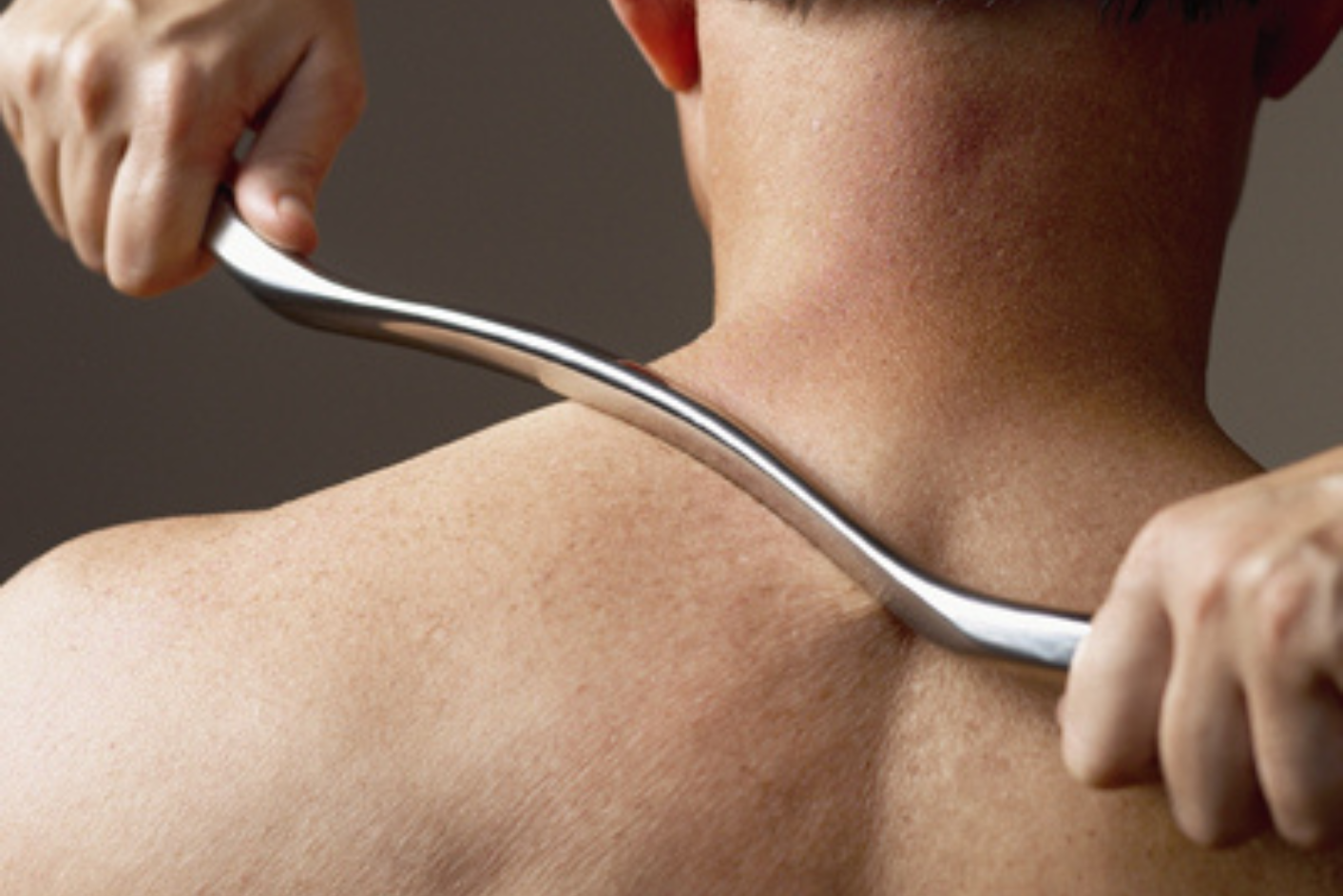
IASTM is a hands-on treatment technique that uses specially designed stainless-steel instruments to assess and treat muscles, tendons, ligaments, and connective tissue.
Does IASTM Hurt?
Not usually.
Most people describe the sensation as:
- Firm pressure
- A deep massage
- A stretching sensation
- Mild discomfort over particularly tight areas
Treatment should never feel unbearable.
Your physiotherapist will adjust the pressure based on your comfort level and treatment goals.
Why Does My Skin Go Red Afterwards?
It’s common to notice temporary redness during or after treatment.
This occurs because IASTM increases local blood flow to the treated area.
Some people experience mild redness that settles within minutes, while others may notice temporary skin marking that can last a day or two.
This is a normal response and does not indicate tissue damage.
What Does the Research Say About IASTM?
Research suggests IASTM may help improve pain, mobility, and function in certain musculoskeletal conditions, particularly when used as part of a broader rehabilitation program.
However, like most physiotherapy treatments, the best results are achieved when hands-on therapy is combined with the right exercise program, activity modification, and education. Research consistently shows that hands-on treatments are most effective when combined with exercise. This supports the principle that movement is medicine when it comes to managing pain and improving long-term function.
At Activate Physiotherapy, we view IASTM as one tool within a complete treatment approach rather than a stand-alone solution.
Is IASTM Better Than Massage?
Not necessarily.
Both treatments have their place.
Massage may be beneficial for general muscle relaxation and symptom relief, while IASTM can provide a more targeted approach to specific areas of tissue restriction or tendon-related pain.
Your physiotherapist will determine which treatment approach is most appropriate for your condition and goals.
What Happens During an IASTM Appointment?
A typical session may include:
- Assessment of your injury or condition
- Movement and strength testing
- IASTM treatment to affected areas
- Exercise prescription
- Advice on activity modification and recovery
IASTM is typically integrated into a comprehensive physiotherapy treatment plan rather than used as a stand-alone treatment. The treatment itself usually takes only a few minutes and your physiotherapist may prescribe strengthening, mobility or Clinical Pilates exercises to help reinforce the improvements achieved during treatment.
Our physiotherapists use a range of evidence-based treatments including IASTM, exercise rehabilitation, massage therapy and hands-on physiotherapy to help you move better and feel your best.
Should I Try IASTM?
If you’re experiencing:
- Persistent muscle tightness
- Tendon pain
- Reduced mobility
- Recurring injuries
- Scar tissue restrictions
IASTM may be a useful addition to your treatment plan.
The best way to determine whether it’s suitable for you is to speak with one of our physiotherapists.
Does IASTM Hurt?
Most people describe IASTM as feeling similar to a deep tissue massage. You may experience some mild discomfort over particularly tight or sensitive areas, but treatment should not be excessively painful. Your physiotherapist will adjust the pressure to suit your comfort level and treatment goals. Some temporary redness may occur after treatment, which is a normal response and usually settles quickly.
Does IASTM break up scar tissue?
This is a common misconception. While IASTM is often described as “breaking up scar tissue,” the reality is more complex.
Current understanding suggests that IASTM may help improve the mobility and function of tissues affected by scarring, injury, or prolonged stiffness. It can also help reduce pain, improve movement, and encourage healthy tissue remodelling as part of the body’s natural healing process.
Rather than physically breaking scar tissue apart, IASTM aims to improve how the tissues move and function.
How Many IASTM Treatments Do I Need?
The number of treatments required varies depending on your condition, how long you’ve had symptoms, and your treatment goals.
Some people notice improvements after just one or two sessions, while others may benefit from a longer rehabilitation program. Most conditions respond best when IASTM is combined with targeted exercises, activity modification, and other physiotherapy treatments.
Your physiotherapist will discuss a personalised treatment plan based on your assessment and progress.
Can IASTM Help Tendon Pain?
IASTM is commonly used as part of a treatment program for tendon-related conditions such as Achilles tendinopathy, tennis elbow, golfer’s elbow, patellar tendinopathy, and gluteal tendinopathy.
While IASTM may help reduce pain and improve mobility, research suggests the best outcomes for tendon pain are achieved when hands-on treatment is combined with a structured exercise program designed to improve tendon strength and capacity.
Your physiotherapist will determine whether IASTM is appropriate for your specific condition.
Is IASTM Covered by Private Health Insurance?
In most cases, yes.
If your physiotherapy appointment includes IASTM treatment and you have extras cover that includes physiotherapy, you can generally claim your consultation as you normally would. Similarly, if you have IASTM as part of your remedial massage therapy consultation. The rebate amount will depend on your individual health fund and level of cover.
We recommend checking directly with your private health insurer if you are unsure about your entitlements.
Can IASTM Help Sports Injuries?
IASTM is frequently used in the management of sports injuries involving muscles, tendons, and soft tissues.
It may be incorporated into treatment plans for muscle strains, tendon injuries, overuse injuries, movement restrictions, and post-injury rehabilitation. Many athletes also use IASTM to help maintain mobility and address areas of tightness that may affect performance.
As with all physiotherapy treatments, IASTM is most effective when combined with a comprehensive rehabilitation program that addresses strength, flexibility, movement patterns, and return-to-sport goals.
The Bottom Line
Those metal tools you sometimes see physiotherapists using aren’t medieval torture devices.
They’re specialised instruments used to help assess and treat muscles, tendons, and connective tissue more precisely.
When combined with the right exercise program and physiotherapy treatment plan, IASTM can be an effective way to improve movement, reduce pain, and support recovery.
Ready to Move Better?
If you’re dealing with persistent aches, tendon pain, or movement restrictions, our team can help determine whether IASTM is right for you.
Book an appointment with one of our physiotherapists and let’s get you out of pain and back to doing what you love.
Key Takeaways – What is IASTM
- IASTM (Instrument Assisted Soft Tissue Mobilisation) is a physiotherapy treatment that uses specialised stainless-steel tools to help reduce pain and improve movement.
- Despite its appearance, IASTM is not about “scraping” muscles or breaking tissues down.
- The treatment can be used to address muscle tightness, tendon pain, scar tissue restrictions, and movement dysfunction.
- Common conditions treated with IASTM include Achilles tendinopathy, tennis elbow, gluteal tendinopathy, and sports-related injuries.
- Most people describe IASTM as feeling similar to a deep tissue massage, with mild discomfort only in sensitive areas.
- Temporary redness after treatment is normal and is typically the result of increased blood flow to the area.
- Research suggests IASTM may help improve pain, mobility, and function when used as part of a broader rehabilitation program.
- The best results are achieved when IASTM is combined with exercise rehabilitation, education, and other physiotherapy treatments.
- IASTM is simply one of many tools physiotherapists use to help patients move better, recover from injury, and return to the activities they enjoy.
“Patients often ask about the metal tools, but what excites me isn’t the tool itself—it’s what the treatment helps people get back to doing. Whether that’s running, exercising, working, or simply moving without discomfort, IASTM can be a great addition to a well-rounded physiotherapy treatment plan.”
Recent Comments