

Quick Answer
Cold weather doesn’t usually cause injuries, but it can make existing aches and pains feel worse. Increased muscle stiffness, reduced activity levels, changes in air pressure and heightened pain sensitivity can all contribute to winter discomfort.
Have you ever noticed that an old knee injury starts aching when the temperature drops? Or that your back feels stiffer getting out of bed on a cold winter morning?
You’re certainly not alone.
One of the most common things we hear in the clinic during winter is:
“I don’t know what’s changed, but everything seems to hurt more when it’s cold.”
The interesting thing is that while winter doesn’t necessarily cause new injuries, it can make existing aches, pains and stiffness feel much more noticeable.
Understanding why this happens can help you stay active, move more comfortably and avoid falling into the common trap of doing less when your body actually needs more movement.
Why Do Aches and Pains Feel Worse in Cold Weather?
In short, colder weather can contribute to increased pain and stiffness because:
- Muscles and connective tissues become less flexible
- We tend to move less during winter
- Joint stiffness becomes more noticeable
- Changes in air pressure may affect sensitive tissues
- Pain sensitivity can increase in cooler conditions
- Previous injuries often become more noticeable
- While researchers are still investigating the exact relationship between weather and pain, there’s enough evidence, and enough patient experiences to know that winter can be challenging for people living with arthritis, old injuries and persistent musculoskeletal pain.
Let’s look at why.
Why Do Muscles Feel Stiffer in Winter?
Think about trying to stretch a cold rubber band.
It doesn’t move as easily as one that’s been warmed up.
A similar thing can happen in our bodies.
Cold temperatures can reduce the elasticity of muscles, tendons and ligaments. As a result, movement may feel less comfortable, especially first thing in the morning or after sitting for long periods.
Many people notice:
- Tight calves
- Stiff hips
- Reduced flexibility
- More discomfort when exercising
- Increased muscle tension around painful areas
This doesn’t necessarily mean damage is occurring. It simply means your body may need a little more preparation before movement.
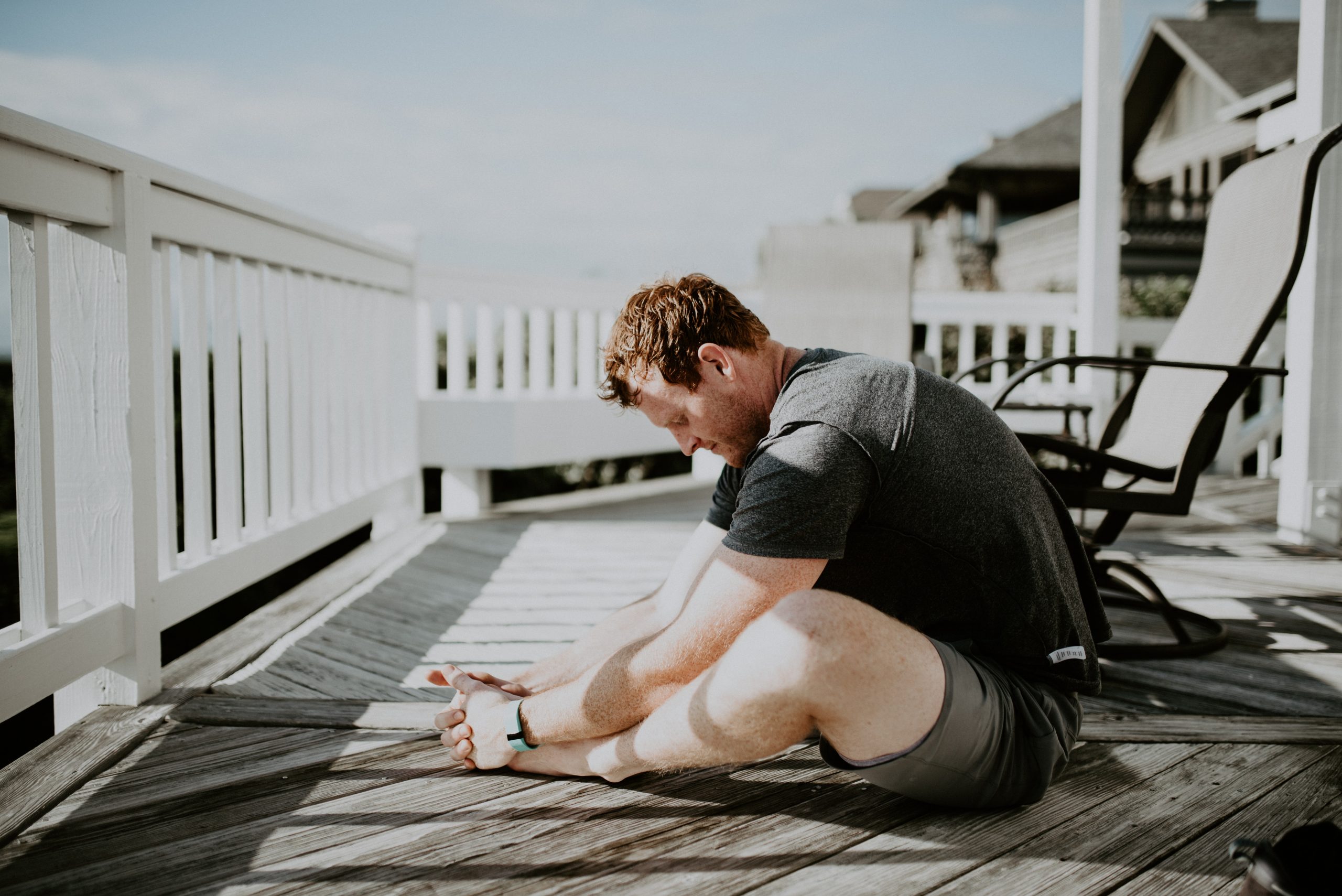
Gentle movement helps improve circulation and reduce stiffness during colder months.
Does Cold Weather Make Arthritis Worse?
This is one of the most searched questions every winter.
The answer is both yes and no.
Cold weather does not cause arthritis and it doesn’t accelerate joint damage.
However, many people with osteoarthritis report increased stiffness and discomfort during colder months.
Several factors may contribute:
- Reduced physical activity
- Increased muscle tightness
- Changes in atmospheric pressure
- Greater awareness of existing symptoms
The result is that arthritic joints may feel more painful, even though the underlying condition itself hasn’t worsened.
“One of the biggest reasons people hurt more in winter isn’tthe weather itself – it’s that we tend to move less.”
Can Changes in Weather and Air Pressure Affect Pain?
Perhaps you’ve heard someone say:
“I can tell it’s going to rain because my knee starts aching.”
Surprisingly, there may be some science behind this.
Barometric pressure refers to the weight of the air around us.
Before storms and weather changes, atmospheric pressure often drops.
Some researchers believe this change may allow tissues around joints to expand slightly, increasing pressure on already sensitive structures.
While research findings are mixed, many people consistently report worsening symptoms during periods of changing weather.
If you’ve ever felt your shoulder, knee or back become more uncomfortable before rain arrives, you’re not imagining it.
Why Do Old Injuries Hurt More in Winter?
Old injuries can have a long memory.
Previous fractures, ligament injuries, tendon injuries and surgical sites often become more sensitive to changes in:
- Temperature
- Activity levels
- Tissue stiffness
- Circulation
- Loading patterns
This doesn’t mean the injury has reoccurred.
More often, the area has simply become more aware of environmental and physical changes happening throughout winter.
This is particularly common after:
- Ankle sprains
- Knee injuries
- Shoulder injuries
- Fractures
- Back injuries
- Sporting injuries
The Biggest Winter Pain Trigger Most People Don’t Realise
While weather gets most of the blame, one factor is often overlooked:
We move less.
When it’s dark, cold and raining outside, many people naturally become less active.
Morning walks become less frequent.
Exercise classes get skipped.
Incidental activity slows down.
More time is spent sitting indoors.
Unfortunately, our joints, muscles and tendons thrive on movement.
When activity decreases, we often experience:
- More stiffness
- Reduced mobility
- Loss of strength
- Increased discomfort with daily activities
In many cases, reduced activity levels are one of the biggest contributors to winter aches and pains, even more so than the weather itself. In fact, movement is one of the most effective tools we have for maintaining strength, mobility and confidence as we age. Learn more about why movement is medicine and how it helps manage pain.

Many people move less during winter, which can contribute to increased stiffness and discomfort.
Should You Rest When Your Pain Flares Up?
Not usually.
While acute injuries may require short periods of relative rest, ongoing aches and pains generally respond better to appropriate movement than complete inactivity.
Research consistently shows that regular exercise helps support:
- Joint health
- Muscle strength
- Balance
- Circulation
- Pain management
- Confidence in movement
The goal isn’t to push through severe pain.
The goal is to keep moving in a way that is appropriate for your body.
For many people, the right amount of movement actually reduces pain rather than increasing it.
10 Ways to Reduce Winter Aches and Pains
1. Keep Moving Every Day
Movement is one of the most effective ways to reduce stiffness and maintain joint health.
Even a short daily walk can help.
2. Don’t Skip Your Warm-Up
Allow extra time before exercise during winter.
Warm muscles generally move more comfortably than cold muscles.
3. Strength Train Regularly
Strong muscles provide support and stability for joints.
This becomes increasingly important as we age.
4. Break Up Long Periods of Sitting
Set reminders to stand, stretch or walk every hour.
Small movement snacks throughout the day can make a big difference.
5. Stay Warm
Layer clothing, use heat packs and avoid sitting in cold environments for long periods.
If you have a particularly sore area or joint sometimes a simple sleeve or compression style brace can provide enough warmth and support to help to reduce your pain and allow you to continue with activity.
6. Prioritise Sleep
Poor sleep can increase pain sensitivity and slow recovery.
Aim for consistent sleep habits throughout winter.
7. Support Recovery with Magnesium
Magnesium plays an important role in muscle function, relaxation and recovery.
Many people find topical magnesium sprays and magnesium bath soaks helpful as part of their evening recovery routine, particularly when managing muscle tightness, post-exercise soreness and sleep quality.
While magnesium isn’t a replacement for movement or treatment, it may be a useful addition to a broader recovery strategy.
8. Stay Hydrated
People often drink less water in winter, but hydration remains important for overall health and physical performance.
9. Address Small Problems Early
Minor aches can become bigger issues when ignored.
Early intervention is often simpler than treating a longstanding problem.
10. Seek Professional Advice If Pain Is Limiting Your Activity
If pain is stopping you from exercising, sleeping well or enjoying your usual activities, a physiotherapist can help identify what’s contributing to the problem and create a plan to keep you moving safely.
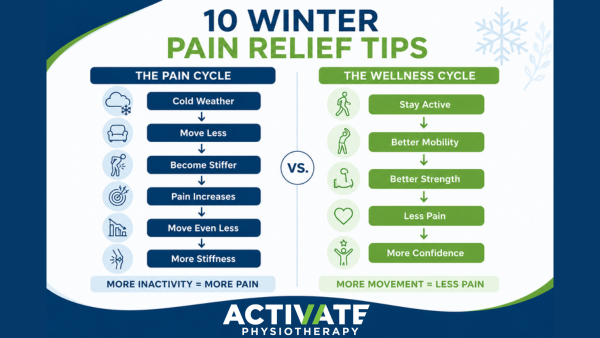
Understanding the cycle of inactivity and stiffness can help explain why many people experience more pain during winter.
When Should You See a Physiotherapist?
Consider seeking professional advice if:
- Pain is lasting longer than a few weeks
- You’re avoiding activities because of pain
- An old injury keeps flaring up
- Stiffness is affecting your daily life
- You’re unsure what exercises are safe for you
- Pain is interfering with sleep
At Activate Physiotherapy, we regularly help Brisbane locals in Tingalpa and Stafford and surrounding areas to manage winter flare-ups of arthritis, old sporting injuries, tendon pain, neck pain and back pain through personalised treatment, education and exercise programs designed to keep people active all year round.
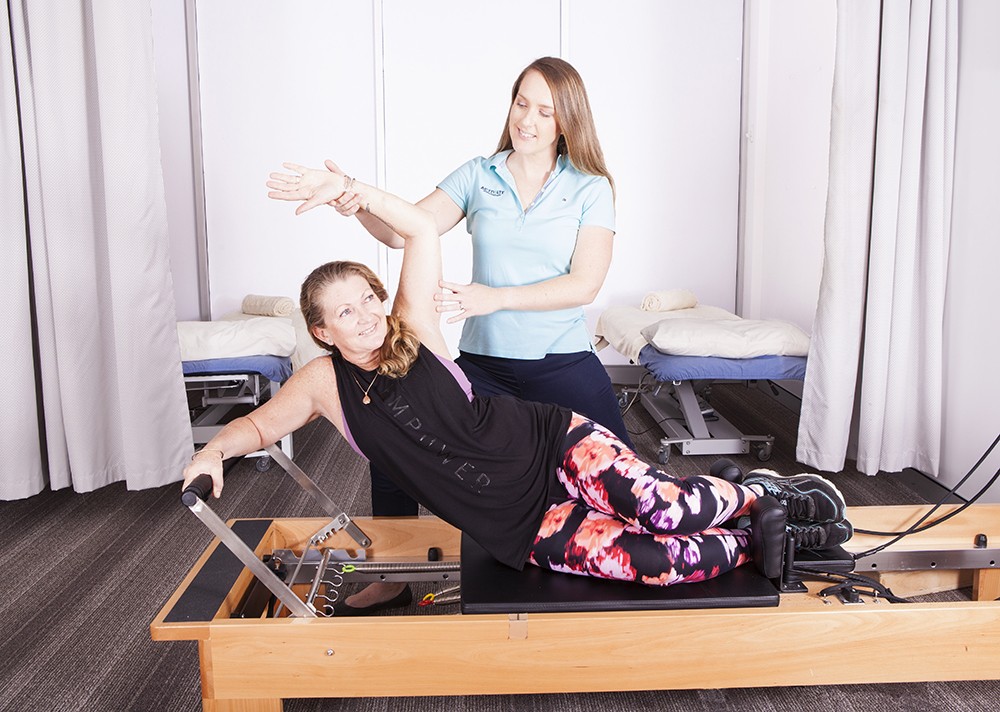
Physiotherapists can help you stay active and confident even when winter aches and pains flare up.
The Bottom Line
Winter may make your aches and pains feel more noticeable, but that doesn’t mean you should hibernate until spring.
In fact, the opposite is often true.
The people who tend to cope best with winter pain are the ones who continue moving, maintain their strength, prioritise recovery and seek help when problems start affecting their quality of life.
Your body was designed to move.
And even during Brisbane’s cooler months, movement remains one of the most powerful tools we have for managing pain and staying healthy.
Key Takeaways
- Cold weather can make aches and pains feel more noticeable.
- Reduced activity is often a bigger contributor than temperature alone.
- Arthritis is not caused by cold weather but symptoms may feel worse.
- Regular movement helps reduce stiffness and improve function.
- Staying active through winter is one of the most effective ways to manage pain.
Not Sure Whether Your Winter Pain Is Normal?
If aches, stiffness or old injuries are stopping you from exercising, sleeping well or enjoying daily activities, speaking with a physiotherapist can help you understand what’s driving your symptoms and develop a plan to keep moving confidently throughout winter.
Book an appointment at Activate Physiotherapy.
Frequently Asked Questions
Why do my joints hurt more when it's cold?
Cold weather can increase muscle stiffness, reduce flexibility and make existing joint problems feel more noticeable. Many people also move less during winter, which contributes to stiffness and discomfort.
Does cold weather cause arthritis?
No. Cold weather does not cause arthritis, but it may increase pain and stiffness in people who already have the condition.
Why do old injuries ache when the weather changes?
Changes in temperature, activity levels and air pressure may increase sensitivity around previous injury sites, making symptoms more noticeable.
Should I exercise if my pain is worse in winter?
In most cases, yes. Appropriate exercise is one of the best ways to reduce stiffness, maintain strength and improve function. The key is choosing the right type and amount of activity.
Is walking good for arthritis?
Yes. Walking like cycling and water based exercise, are low-impact forms of exercise that can help improve joint mobility, muscle strength and overall physical function.
Cold weather doesn’t usually cause injuries, but it can make existing aches and pains feel worse. Increased muscle stiffness, reduced activity levels, changes in air pressure and heightened pain sensitivity can all contribute to winter discomfort.
Recent Comments